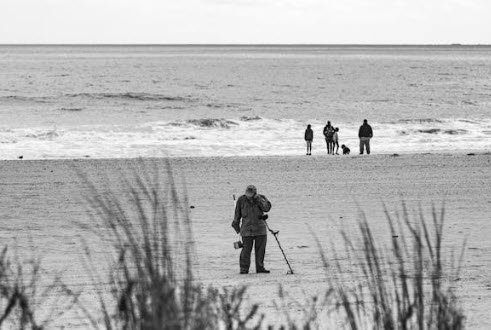
Cumbria Metal Detecting Beaches Guide
Discover the Viking Coast, Roman Shores & Hidden Treasures of England’s North-West
Introduction: Why Cumbria?
If you thought Cornwall was a detectorist’s dream, wait until you explore the wild, wind-swept coastline of Cumbria. Stretching from the Solway Firth in the north all the way down to Morecambe Bay in the south, this remarkable county offers over 100 miles of coastline packed with Viking history, Roman forts, medieval shipwrecks, and centuries of lost treasure just waiting to be found.
Cumbria is still largely off the radar for most detectorists — and that is exactly why it is so exciting. While the beaches of Cornwall and Norfolk attract crowds of hunters, the Cumbrian coast remains gloriously underexplored. The finds here are real, the history is extraordinary, and the scenery is simply breathtaking.
In this guide, we will walk you through the very best beaches for metal detecting in Cumbria, tell you what you are likely to find, explain the rules and permissions you need, and give you all the practical information to make your trip a success. Whether you are a seasoned detectorist or picking up a machine for the first time, Cumbria will not disappoint.
The History Beneath Your Feet
Cumbria has been inhabited for thousands of years, and almost every era has left something behind in its soil and sand. The Romans built forts and supply depots all along the Solway coast as part of the western extension of Hadrian’s Wall. Coins, brooches, and military fittings from this period still surface regularly.
Then came the Vikings. Between the 9th and 11th centuries, Norse settlers farmed, traded, and fought all along this coastline. Their hoards — silver arm-rings, coins, and hacksilver — are among the most spectacular finds ever made in northern England. The famous Cuerdale Hoard, found not far away in Lancashire, is a reminder of just how much Viking silver was once circulating in this part of the world.
Medieval merchants, fishing communities, smugglers, and wartime activity have all added further layers of history to the Cumbrian shore. Every beach here has a story, and your detector is the key to unlocking it.
Understanding the Cumbrian Coast
Before you set off, it helps to understand the geography. The Cumbrian coastline is divided into two distinct stretches:
The Solway Coast (North) — Running from Carlisle down to Workington, this is a flat, sandy coast with tidal mudflats, salt marshes, and wide open beaches. The Solway was a major crossing point for Romans, Vikings, and medieval traders. The finds potential here is exceptional.
The West Cumbrian Coast (Central & South) — From Workington down through Whitehaven, St Bees, Ravenglass, and into Morecambe Bay, this stretch features rockier shores, ancient harbours, and the remains of Roman fort at Ravenglass. The variety of terrain makes for exciting and varied detecting.
Tides are critical on this coastline. The Solway in particular has some of the fastest-rising tides in Britain — always check tide tables before you go, and never get caught out on the mudflats.
Rules, Permissions & the Law
Metal detecting in Cumbria — as anywhere in England — is perfectly legal as long as you follow the rules. Here is what you need to know:
Always get permission from the landowner before detecting on any land, including beaches managed by local councils or the National Trust.
Scheduled Ancient Monuments are strictly off-limits. Detecting on or near them without a licence is a criminal offence. Cumbria has many scheduled sites, so always check the Historic England database before you go.
Report your finds to the Portable Antiquities Scheme (PAS). This is not legally required for most finds, but it is good practice, helps record history, and builds your reputation as a responsible detectorist.
Treasure Act 1996 — Any find that qualifies as Treasure (broadly, gold or silver items over 300 years old, or groups of coins) must be reported to the local coroner within 14 days.
Join a detecting club — Cumbria has active clubs that can advise on permissions, local hotspots, and best practice.
Essential Kit for Cumbrian Beaches
Beach detecting in Cumbria requires slightly different kit to inland field work. Here is what to bring:
A waterproof or beach-capable detector — Sand, salt water, and wet conditions will challenge a basic machine. The Minelab Equinox 800, XP Deus II, or Garrett AT Pro are all excellent choices.
A long-handled sand scoop — Essential for wet sand and shallow water work. Stainless steel is best.
Waders or waterproof boots — Many of the best targets are found just at the water’s edge.
A finds pouch — Keep your targets safe and separate from rubbish finds.
Tide tables — Download the UK Hydrographic Office app or use the Easytide website. Always know when the tide is turning.
Ordnance Survey maps — A 1:25,000 OS map of the area you are hunting is invaluable for locating old trackways, lost buildings, and ancient crossing points.
Silloth Beach — The Solway Gem
Location: Silloth, Cumbria CA7 4DD
Type: Sandy beach with areas of shingle
Best for: Victorian and Edwardian coins, buttons, and jewellery; occasional Roman material
Silloth is a classic Victorian seaside resort on the Solway Firth, and its beach is one of the most consistently productive in Cumbria for detectorists. The town was developed as a holiday destination by the railway companies in the 1850s, and decades of day-trippers, holidaymakers, and locals have left behind a rich layer of dropped coins, jewellery, and personal items.
The wide sandy beach is ideal for detecting at low tide, when large areas are exposed. Focus on the areas around the old pier foundations, the green, and the beach access points where people gathered in Victorian times. Silver coins, brooches, and rings are regularly found here.
Top tip: Check the beach after a good westerly storm — the waves regularly churn up material from deeper in the sand.
Allonby Beach
Location: Allonby, Cumbria CA15 6PA
Type: Long, flat sandy beach
Best for: Roman coins, Viking-period finds, and post-medieval material
Allonby is a quiet, unspoiled village on the Solway coast, and its long flat beach is one of the best-kept secrets on the Cumbrian detecting circuit. The Romans had a strong presence along this stretch of coast, and Roman coins and brooches have been found here over the years.
The beach is wide and relatively easy to work at low tide. The northern end, towards the old bathing houses, tends to produce the most Victorian and Edwardian material, while the southern end is better for earlier finds. The shallow offshore zone, accessible with waders, can be very productive after storms.
Top tip: The area around the old Allonby racecourse (now gone) to the south of the village is worth investigating with the landowner’s permission — race meetings attracted large crowds throughout the 18th and 19th centuries.
Maryport Harbour & Beach
Location: Maryport, Cumbria CA15 8AB
Type: Harbour town with sandy and rocky beach
Best for: Roman coins and artefacts, maritime finds, Victorian material
Maryport sits on the site of the Roman fort of Alauna, one of the key forts on the Solway coast. The town has been continuously occupied since Roman times, and the finds potential is outstanding. The Senhouse Roman Museum in the town holds one of the finest collections of Roman altars in Britain — all found locally.
The beach to the south of the harbour is accessible and productive. The harbour walls and foreshore have yielded Roman coins, medieval pottery, and maritime artefacts. Always check permissions carefully here, as some areas are managed by the harbour authority.
Top tip: The Maryport and District Detecting Club is active in this area and can provide invaluable local knowledge and permissions advice.
Workington Beach
Location: Workington, Cumbria CA14
Type: Sandy beach with industrial history
Best for: Victorian coins and tokens, maritime finds, occasional medieval material
Workington is an industrial town with a long maritime history, and its beach reflects that heritage. The town was a major coal and iron exporting port from the 18th century onwards, and the beach area has seen centuries of human activity.
The beach south of the harbour, around Workington Hall and the old pier area, is the most productive zone. Victorian pennies, trade tokens, and maritime fittings are common finds. The area around the old Workington Hall ruins (accessible with permission) has produced medieval material including coins and buckles.
St Bees Beach
Location: St Bees, Cumbria CA27 0ES
Type: Shingle and sand beach below red sandstone cliffs
Best for: Medieval finds, Victorian material, interesting geological specimens
St Bees is one of the most dramatic beaches on the Cumbrian coast, backed by towering red sandstone cliffs and overlooked by the ancient priory of St Bees. The beach is a mix of shingle and sand, which can make detecting more challenging but also means that targets are less likely to have been heavily hunted.
The area around St Bees Head is a Site of Special Scientific Interest, so check restrictions carefully before detecting here. The beach itself and the land above the high water mark require permission from the landowner. Medieval coins and artefacts have been found in the fields around the priory — always approach the landowner respectfully and explain the Portable Antiquities Scheme.
Top tip: The red sandstone cliffs here erode constantly, especially in winter, regularly exposing new material. Visit after a period of cliff falls for the best chance of fresh finds.
Seascale Beach
Location: Seascale, Cumbria CA20 1QY
Type: Sandy beach
Best for: Victorian and Edwardian holiday finds, occasional earlier material
Seascale was a popular Victorian bathing resort, and its wide sandy beach retains good potential for holiday-period finds. The beach is accessible and relatively easy to work, with large areas exposed at low tide.
The village end of the beach, near the old boat houses and beach access paths, tends to be most productive. Coins, buttons, and small personal items from the Victorian and Edwardian eras are the most common finds, though earlier material occasionally surfaces after storms.
Ravenglass — The Roman Harbour
Location: Ravenglass, Cumbria CA18 1SQ
Type: Estuary and foreshore
Best for: Roman finds, medieval material, estuary hunting
Ravenglass is one of the most historically significant sites on the entire Cumbrian coast. The Romans built their naval base here — Glannoventa — and the bath house, known locally as Walls Castle, still stands to remarkable height. It is one of the tallest surviving Roman structures in northern England.
Important: The Roman fort and bath house are Scheduled Ancient Monuments — detecting on them is illegal. However, the surrounding estuary foreshore and beach areas (with permission) have produced Roman coins, brooches, and pottery over the years. The estuary is best worked at very low spring tides, when large areas of sand and gravel are exposed.
Top tip: Speak to the local landowners and the Ravenglass & Eskdale Railway team — they are generally very welcoming of responsible detectorists and may be able to point you towards permitted areas.
Silecroft Beach
Location: Silecroft, Cumbria LA18 4NX
Type: Shingle and sand, relatively undisturbed
Best for: Post-medieval and Victorian material, occasional earlier finds
Silecroft is a quiet, little-visited beach south of Ravenglass, and that makes it extremely attractive to detectorists. The beach is long, largely undisturbed, and backed by low dunes and farmland. Access is good, with a small car park at the beach.
The relative lack of detecting pressure here means that good finds are still being made. Victorian and post-medieval coins, buttons, and small personal items are the most common targets. The area around the stream outflow at the northern end of the beach can be productive, as this was historically a meeting point for farmers and travellers.
Barrow-in-Furness & Walney Island
Location: Walney Island, Barrow-in-Furness, Cumbria LA14
Type: Long sandy and shingle beaches on both sides of the island
Best for: Victorian material, occasional Bronze Age finds, maritime artefacts
Walney Island is a long, thin barrier island protecting the Barrow estuary. Its beaches are extensive and varied — the west coast faces the Irish Sea and takes the full force of Atlantic storms, while the east coast is calmer and more sheltered.
The northern tip of Walney (North Walney National Nature Reserve) requires a permit for access, but the southern beaches are more freely accessible. Bronze Age material has been found on Walney, and the island has a long history of human occupation. Victorian material is common throughout.
Morecambe Bay — The Southern Gateway
Location: Arnside and Grange-over-Sands area, southern Cumbria
Type: Wide tidal sands — EXTREME CAUTION REQUIRED
Best for: Medieval coins, post-medieval material, occasional earlier finds
Morecambe Bay is one of the largest intertidal areas in Britain, and its sands have been crossed by travellers for centuries — including the famous sand route from Lancaster to Furness used throughout the medieval period.
CRITICAL WARNING: Morecambe Bay has extremely dangerous tides and quicksand areas. People have died here. Never detect on the open sands without the guidance of the official Queen’s Guide to the Sands. Detecting is best done on the firm sands near the shore at Grange-over-Sands, Arnside, or Silverdale — always check conditions very carefully and never go alone.
The finds potential is extraordinary — medieval coins, pilgrim badges, and personal items lost by centuries of travellers have all been found in and around the bay.
What You Might Find — Cumbria’s Top Targets
Cumbria offers a remarkable range of potential finds:
Roman (43 AD – c.410 AD)
Copper alloy coins (the most common Roman find)
Silver denarii — more valuable and rarer
Bronze brooches, often in the crossbow or plate styles
Military fittings — belt plates, strap ends, stud fasteners
Pottery and tile fragments (not detectable, but useful for locating sites)
Viking & Early Medieval (800–1100 AD)
Silver arm-rings and ingots (hacksilver)
Coins — Viking issues and Anglo-Saxon pennies
Bronze pins and ringed pins
Weights used in Viking trading
Medieval (1100–1500 AD)
Hammered silver coins — pennies, halfpennies, farthings
Pilgrim badges and religious items
Seal matrices
Buckles, strap ends, and personal adornments
Post-Medieval & Victorian
Milled coinage from the 17th century onwards
Trade tokens
Buttons and buckles
Personal jewellery — rings, brooches, lockets
Thimbles, weights, and domestic items
Best Times to Detect
Season: Spring and autumn are ideal. Summer brings tourists and crowded beaches. Winter storms can be excellent for churning up fresh material but make conditions challenging.
Tides: Always detect on a falling tide and work back towards the water as the tide drops. This gives you maximum time on the exposed beach. Spring tides (around new and full moon) expose more beach than neap tides.
After storms: The best finds often come after rough weather. Storms move sand around dramatically and can expose material that has been buried for years or even centuries.
Morning: Early morning is best on popular beaches — less foot traffic, and you have the beach largely to yourself.
Local Detecting Clubs & Contacts
Joining a local club is one of the best things you can do as a detectorist in Cumbria. Clubs have established permissions on good land, share knowledge, organise digs, and help new members get started properly.
Cumbria Metal Detecting Society — Active club covering the whole county. Contact through the National Council for Metal Detecting (NCMD) website.
West Cumbria Detectorists — Based in the Whitehaven and Workington area. Very active on local beaches and farmland.
Portable Antiquities Scheme (Cumbria): Contact the Finds Liaison Officer for Cumbria through the PAS website at finds.org.uk — they are friendly, helpful, and keen to record interesting finds.
Historic England Scheduled Monument database: historicengland.org.uk/listing/the-list — Always check before detecting in a new area.
Tide Times & Safety
Tide Tables: The most reliable source is the UK Hydrographic Office — use their free Easytide service at easytide.ukho.gov.uk, or download the Tidetimes app.
Solway Firth Warning: The Solway has some of the fastest-rising tides in Britain. What looks like a safe stretch of sand can be surrounded by water in minutes. Always know your escape route.
Morecambe Bay Warning: As noted in Chapter 14, the open sands of Morecambe Bay are extremely dangerous. Never venture onto the open bay without the Queen’s Guide.
Always tell someone where you are going and when you expect to return. Carry a fully charged mobile phone, and be aware that signal coverage on remote parts of the Cumbrian coast can be poor.
Ranked Beach Guide — Best to Good
Here is a quick overview to help you plan your trip:
| Beach | History Rating | Accessibility | Finds Potential | Crowds |
|---|---|---|---|---|
| Maryport |  | | | Low |
| Silloth | | | | Low–Medium |
| Ravenglass | | | | Low |
| Allonby | | | | Very Low |
| St Bees | | | | Low |
| Silecroft | | | | Very Low |
| Seascale | | | | Low |
| Walney Island | | | | Low |
Final Tips — Getting the Best from Cumbria
Research before you go. Spend time with OS maps and the Historic England database before visiting a new beach. Look for old field systems, medieval trackways, and ancient crossing points — these are where people lost things.
Be patient. Cumbrian beaches can be slow to yield their secrets, but when they do, the finds can be spectacular.
Be respectful. Fill in all your holes, take your rubbish home, and be polite to farmers and landowners. The reputation of detectorists depends on each of us behaving well.
Record your finds. Report anything interesting to the Portable Antiquities Scheme. It costs you nothing, adds to the historical record, and may earn you recognition for an important discovery.
Enjoy it. Cumbria is one of the most beautiful counties in England. Even a blank day detecting on a windswept beach above the Solway, with the Scottish hills in the distance, is a day well spent.
Conclusion: Your Cumbrian Adventure Awaits
The Cumbrian coast is a detectorist’s paradise hiding in plain sight. While other counties attract most of the attention, Cumbria offers extraordinary history, largely undisturbed beaches, and the genuine prospect of Viking silver, Roman bronze, and centuries of lost human treasure. Pack your machine, check your tides, get your permissions — and go find it.